
Criminal Cases in Christian County Courts
The Circuit Court of the Fourth Judicial Circuit hears Christian County felony and misdemeanor cases at the courthouse in Taylorville. Illinois does not split these matters between separate county and district criminal courts. Traffic and municipal ordinance matters may also enter the unified Circuit Court. The Circuit Clerk, Jeffrey A. Voorhees, establishes and maintains the court file, court seal, docket, schedules, and related financial records.
A police arrest record is not the court file. Once the State's Attorney files a complaint or information, or a grand jury returns an indictment, the Christian County Circuit Clerk preserves the charging and judicial record. The State's Attorney does not provide general information about open or closed criminal cases and directs police-report requests to the arresting agency. For arrest-stage material, use the separate Christian County arrest history channels.
The Illinois Courts directory shows the official Christian County courthouse entry.
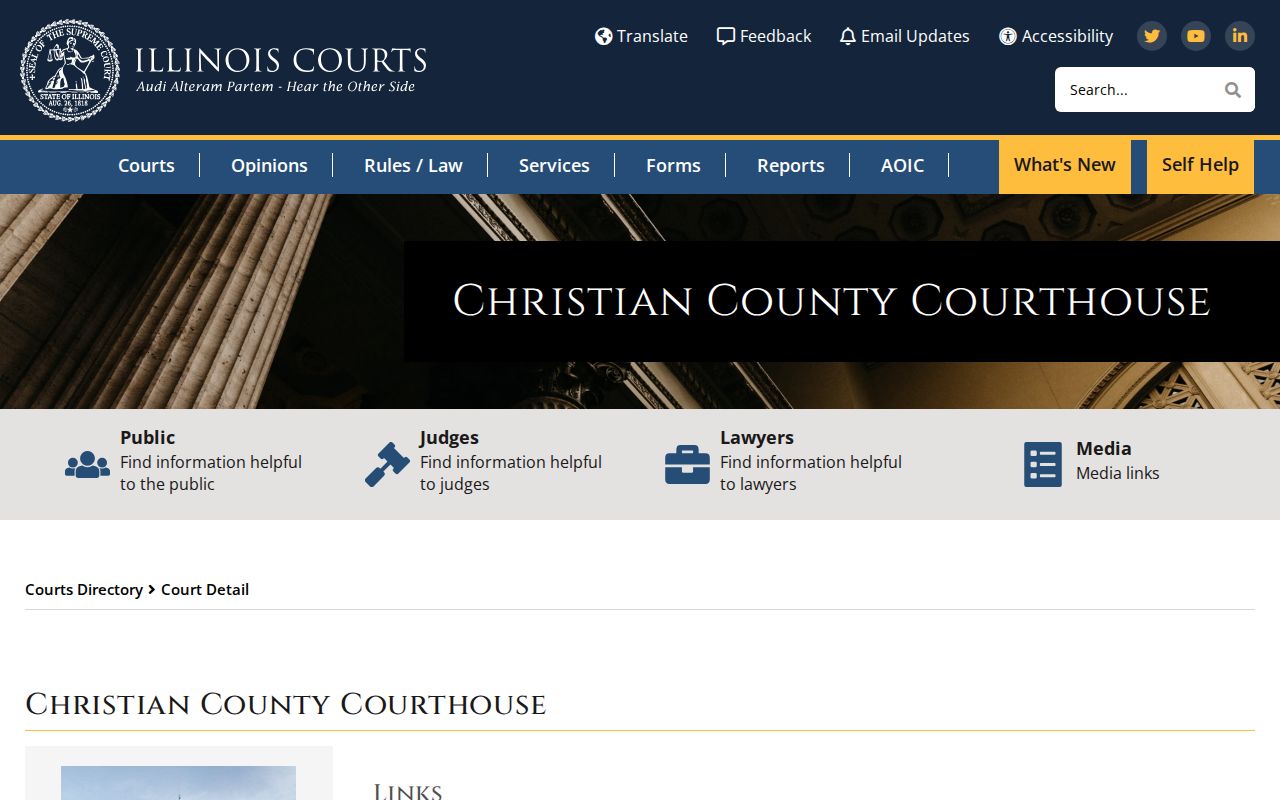
This official view confirms the court location and provides the county's recognized court access route.
Christian County Circuit Clerk Desk
The clerk's office is at 101 South Main Street, P.O. Box 617, Taylorville, IL 62568. Public hours are Monday through Friday, 8:00 a.m. to 4:00 p.m. Call (217) 824-4966 or fax (217) 824-5030 to ask about public-terminal access, a case number, archived paper files, document availability, certification, and current costs. A focused request should name the case, the filing or event date if known, and the exact document needed.
The official Circuit Clerk page is the local starting point for record and office details.
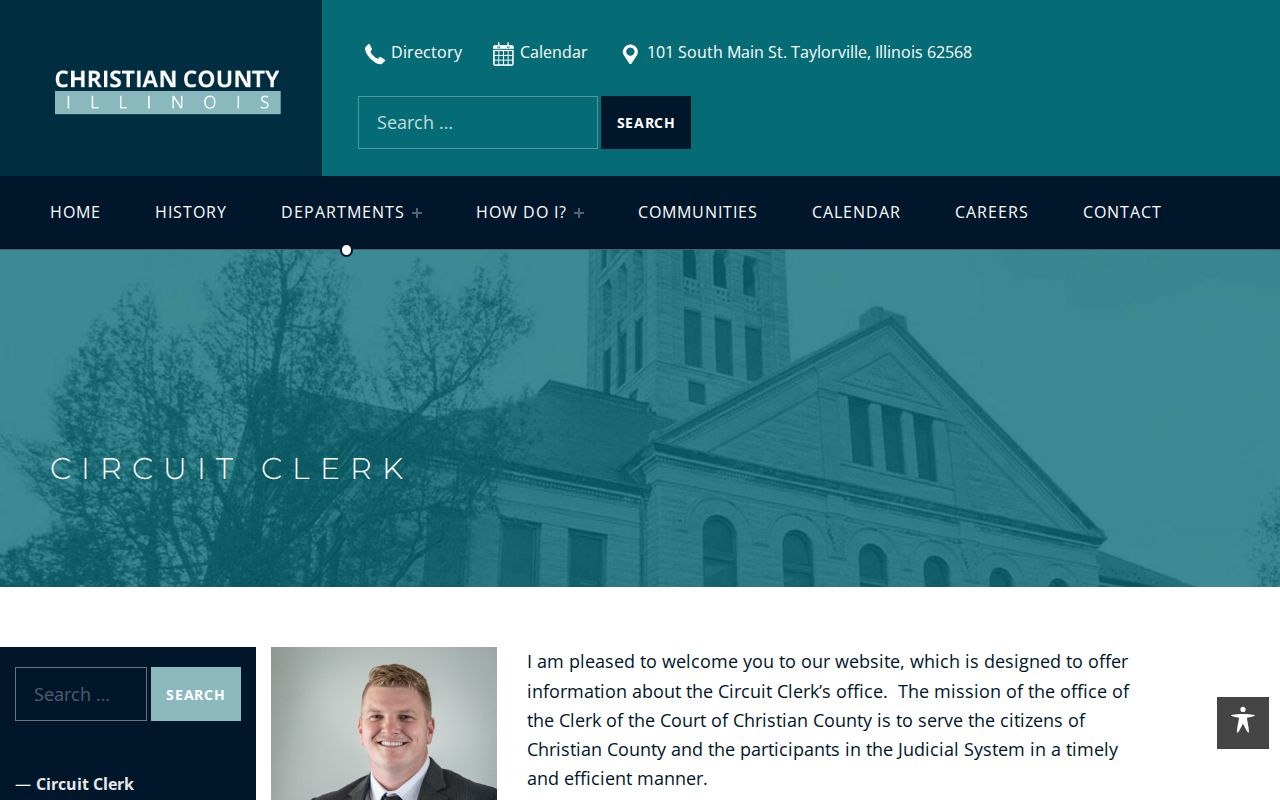
The clerk remains the authority when a remote index omits a filing, offers only a docket, or cannot supply a certified result.
Christian County Circuit Clerk
101 S. Main St., P.O. Box 617
Taylorville, IL 62568
(217) 824-4966
Monday-Friday, 8:00 a.m.-4:00 p.m.
How to Search Christian County Case Records
The county supplies a Christian County Judici case-information link, while re:SearchIL is the Supreme Court's statewide document repository. Remote access depends on Illinois policy, user permissions, and local implementation. Use the clerk counter for the full public file or certification.
- Open the county's official Judici link or re:SearchIL and select Christian County when that choice appears.
- Search by full party name, or use the full court-assigned case number for the most exact route.
- Narrow a name result with middle name, filing range, court location, and criminal or traffic case type where offered.
- Read the docket from filing through final judgment, checking amendments, dismissals, pleas, and sentence entries.
- Contact the Circuit Clerk for a missing document, an older file, a plain copy, or a certified disposition.
| Field label | Type | Use | Notes |
|---|---|---|---|
| Search Type | Tab or menu | Choose person, case number, or citation | Choices can vary by access group |
| First, Middle, Last Name | Text | Find a party | Last name is normally needed; middle name helps separate matches |
| Case Number | Text | Direct case path | Enter the full assigned number |
| County or Court Location | Menu | Limit venue | Select Christian County when offered |
| Case Type | Menu | Limit record class | Criminal and traffic choices depend on permissions |
| Filed From and To | Date | Narrow years | Useful for a common name |
The re:SearchIL interface illustrates the statewide search layer.
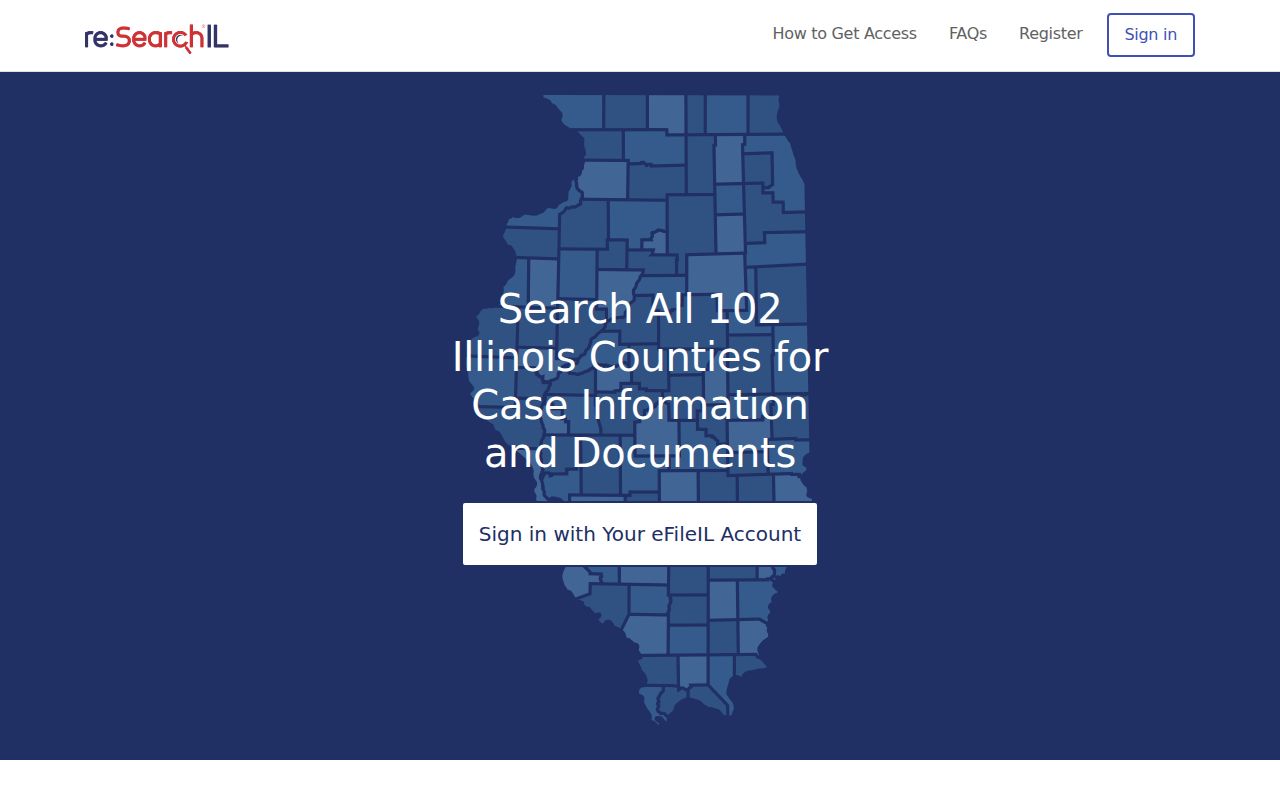
Its fields help narrow a search, but the clerk decides local document access and certification.
Christian County Judici Access Limits
The county-endorsed Judici service can expose Christian County case information, but it is a vendor service rather than a government agency. The inspected interface presented a human-verification challenge. That barrier means automated or repeated searching may stop before results, and no private defendant file should be harvested to test it. A failed challenge does not mean that the case does not exist.
The Christian County Judici search is the exact case-information destination supplied by the county.
When the screen blocks access or gives only a short index, call the clerk with the name, approximate year, and case number if known.
What the Case File Shows
A Christian County criminal case file is a chronological judicial record, not a police narrative. It may retain an original count beside a later amendment or dismissal, so the last disposition and judgment matter more than the first allegation.
| Case Number and Court | Full number, filing date, county, division or case type, status, and assigned judge. |
|---|---|
| Parties | People of the State of Illinois, defendant, and attorneys of record. |
| Charging Document | Complaint, information, or indictment, with counts, ILCS citations, and charge class. |
| Docket Entries | Appearances, counsel, pleas, discovery, motions, settings, orders, trial, and judgment events. |
| Pretrial and Warrants | Detention request or order, release conditions, and public issue, quash, or recall events. |
| Disposition and Sentence | Outcome by count, conviction if any, sentence, supervision, fines, restitution, and costs where public. |
Christian County Court Copy Fees
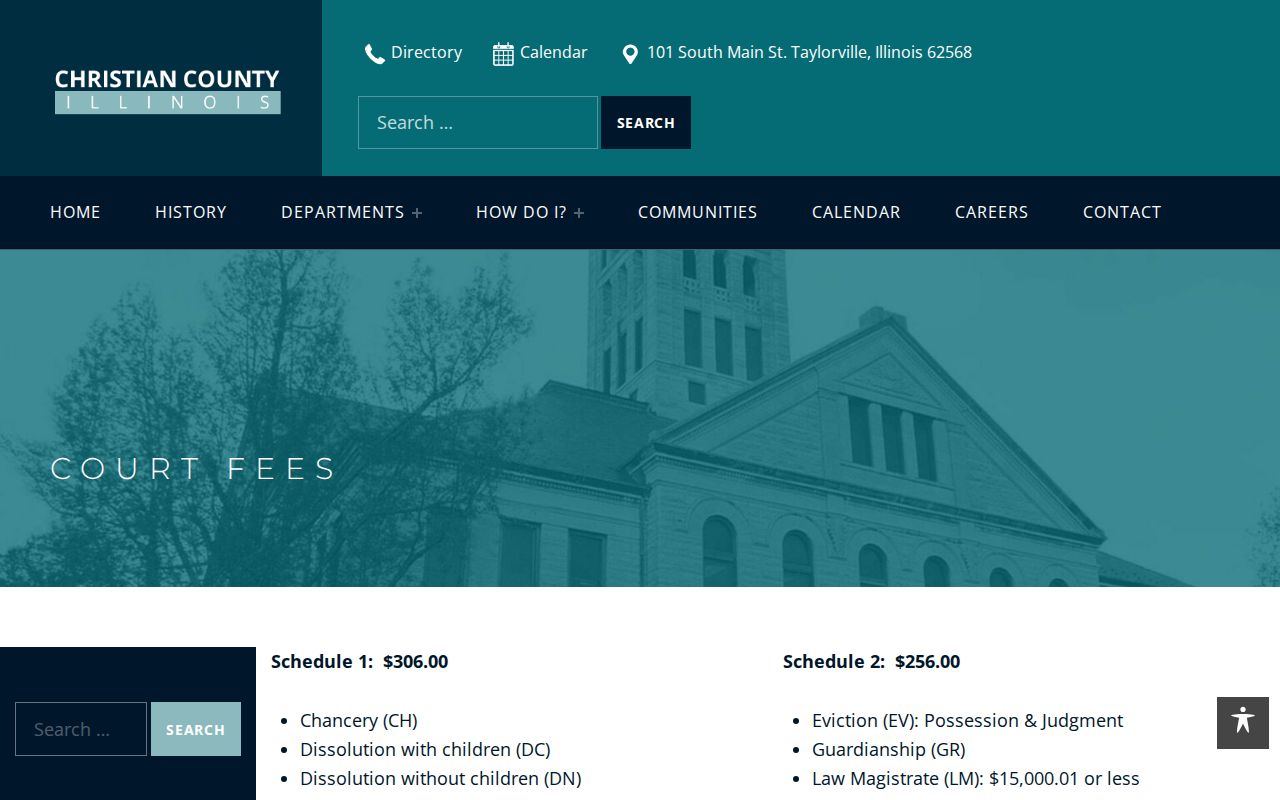
The clerk's published schedule separates searching, copying, certification, mailing, and filing. A record search is $6 for each year searched. A certified copy is $6. Ordinary copies are $2 for the first page, 50 cents per page for pages 2 through 19, and 25 cents per page from page 20 onward. A mailed response adds $10 plus postage. Verify the schedule before ordering.
The official court-fee page shows the local charges.
Ask whether the requested result is a docket, a filed document, or a certified disposition because each serves a different need.
Stages of a Christian County Criminal Case
A local matter can begin with an arrest or summons, followed by a prompt first appearance and a charging decision. Felonies and misdemeanors may proceed by complaint or information, while a grand jury can return an indictment. Arraignment records the plea. Pretrial entries then track discovery, motions, release or detention questions, and hearing settings. The case ends at this level through dismissal, plea, or trial, followed by judgment and sentence when appropriate.
Case flow: Charges Filed › Arraignment › Pretrial › Plea or Trial › Disposition › Sentencing
Illinois replaced monetary bail for new cases with a pretrial-release and detention framework. Older Christian County dockets can still contain cash or surety bond terms. Do not apply old bond language to a new case without reading the actual order.
Reading Christian County Dispositions
A name hit only identifies a possible match. Confirm the Christian County venue, case number, filing date, and any lawful identity detail shown. Then distinguish a dismissal, nolle prosequi, not-guilty finding, and conviction. A charge can be amended or never filed after arrest. A warrant entry may later be quashed or recalled, and only the issuing court or sheriff can confirm live status.
An ISP criminal-history cycle may say that no disposition was received even when the Christian County court has completed the matter. Compare the state entry with a clerk-certified disposition, then use ISP Access and Review if the identity-based state record is incomplete. The court record is the best source for what the judge did; it is not a statewide rap sheet.
Christian County Court Forms and Help
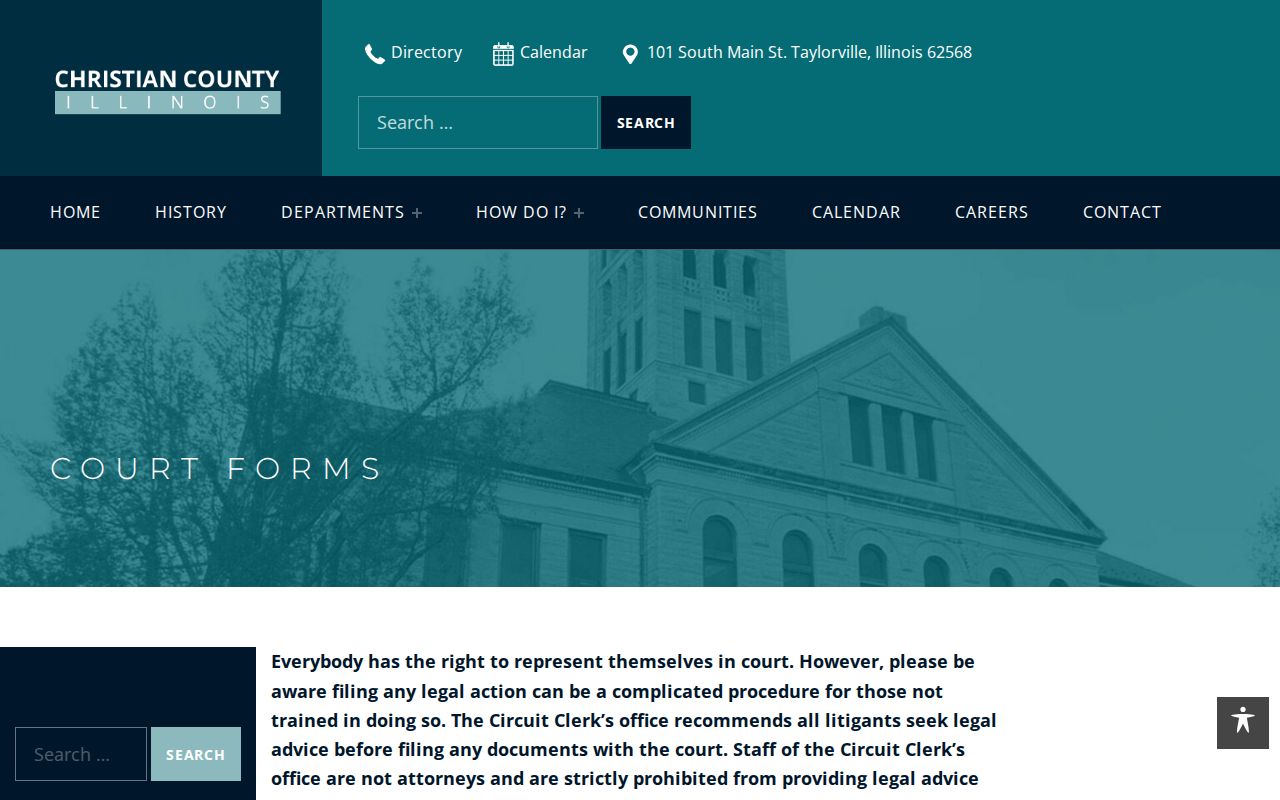
The clerk's forms collection links mandatory statewide forms and local materials, including motions, notices of hearing, subpoenas, applications for supervision, assessment-waiver forms, and protection or no-contact forms. Clerk staff can explain filing mechanics but cannot give legal advice. Illinois Court Help offers call or text assistance at 833-411-1121, Monday through Friday, 9:00 a.m. to 2:00 p.m.
The official Christian County court-forms page supplies the current links and warning.
Use the latest court-approved version, and ask the clerk how the form must be filed rather than relying on an old saved copy.
Access and Restrictions
Court records are governed by court rules, statutes, and orders, not ordinary agency FOIA alone. The Illinois Supreme Court Remote Access Policy permits narrower internet access than courthouse access because online release can create added privacy risk. A Christian County document may be open for counter inspection even when it is not remotely visible.
Juvenile, sealed, impounded, adoption, mental-health, and other confidential records remain restricted. Victim information, personal identifiers, and protected exhibits may be withheld or redacted. If a Christian County case does not appear online, ask the clerk whether it is archived, restricted from remote display, filed under a different identifier, or unavailable by law. Absence from a search screen is never proof that no case exists.